
As the global demand for reliable, low-carbon energy alternatives accelerates, nuclear power is stepping back into the spotlight. But behind the scenes of this energy transition lies a critical scientific imperative: ensuring the absolute safety of nuclear materials at every stage of their lifecycle.
Postgraduate Researcher and AINSE SAAFE Scholar Maria Nicholas is immersed in the world of uranium chemistry and crystallography. Her doctoral studies have focused on the structural response of select mixed metal uranium oxides and oxide hydrates to elevated temperatures and pressures.
The foundation of the nuclear fuel cycle
Uranium oxides are the foundation of the nuclear fuel cycle. They present themselves as highly complex chemical species throughout every single step of the process, from fuel fabrication to active reactors, and ultimately, to long-term storage.
If we want to optimise the safe handling, transportation, and long-term geological disposal of nuclear waste, we need an airtight understanding of the fundamental properties of these materials. Therefore, we must investigate down to the atomic level to see how their crystal structures shift when the heat is turned up.
Leveraging world-class infrastructure at ANSTO
Investigating the secret life of uranium requires a specialised toolkit. As little is known about how uranium oxides and oxide hydrates react to intense thermal environments, this work demands highly specialised facilities.
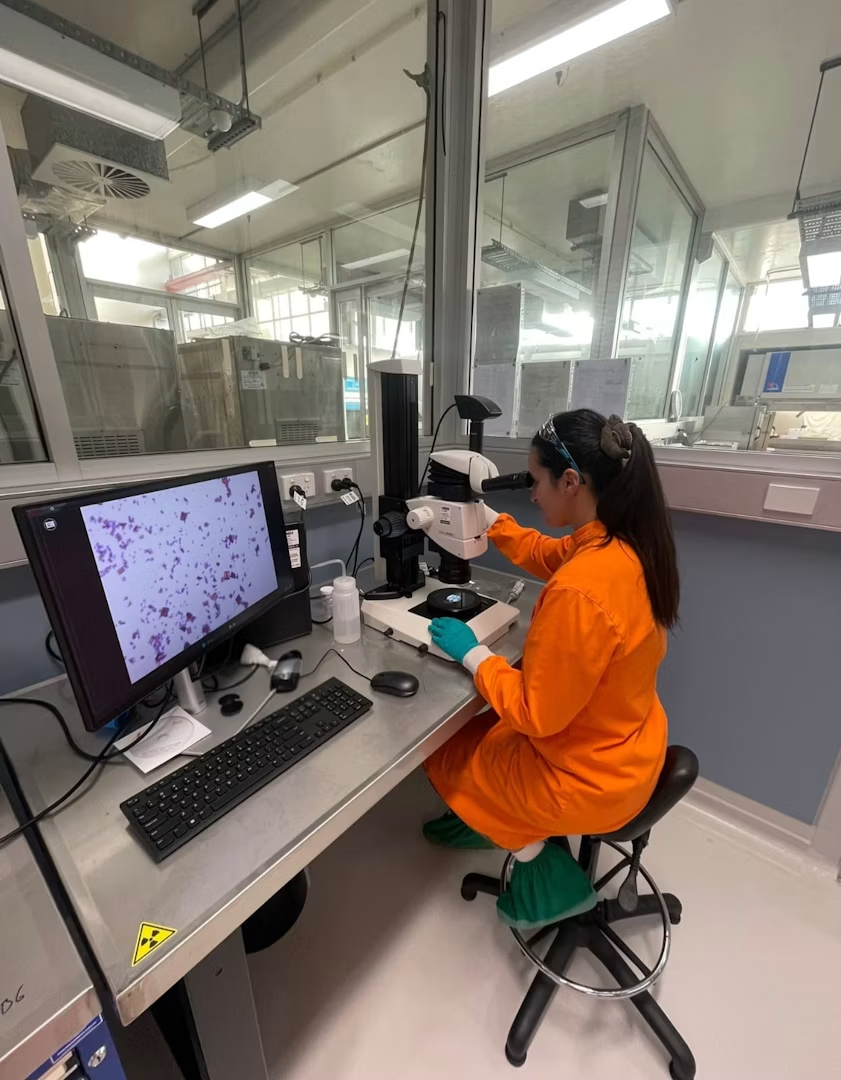
Maria has been fortunate to conduct her research using ANSTO’s landmark infrastructure, including:
- The Materials Fabrication Bay (MFB): Providing the specialised, secure environments essential for the safe handling of radiological materials.
- The Australian Centre for Neutron Scattering (ACNS) & The Australian Synchrotron (AS): Giving her advanced characterisation techniques needed to watch atomic structures transform in real time via in-situ variable-temperature powder diffraction.
Spotting atomic shifts in real time
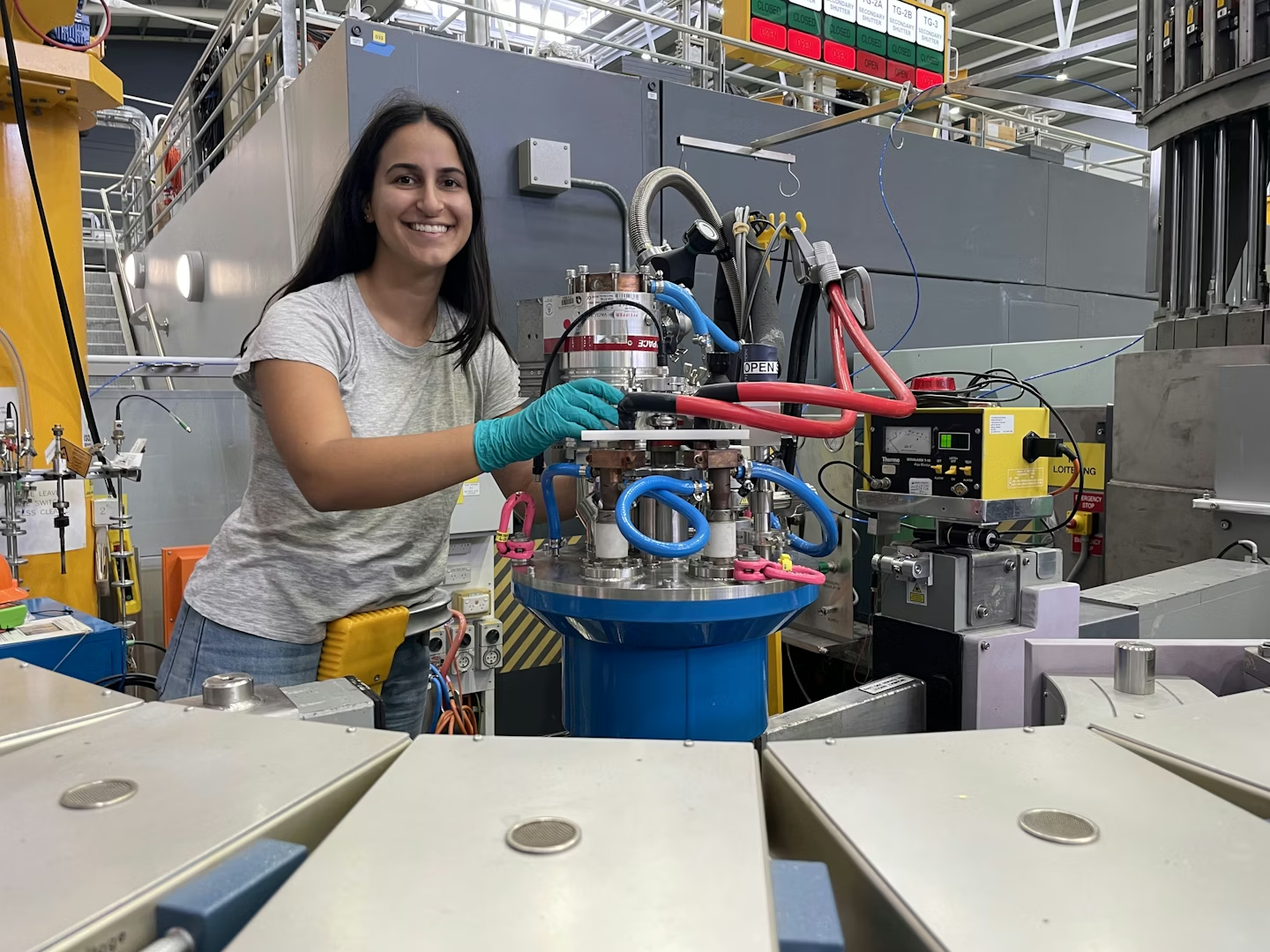
In a recent publication in Chemistry–A European Journal (Nicholas et al., 2026), Maria and her co-authors combined the powers of the WOMBAT high-intensity powder diffractometer beamline at ACNS with the Powder Diffraction (PD) beamline at the Australian Synchrotron.
By using these powerful scientific instruments, Maria and her colleagues were able to observe a live, continuous broadcast of uranium-based materials at the atomic level as they were being heated. Instead of cooking the samples first and analysing them after they cooled, they blasted them with heat while the beams were actively scanning them. This allowed them to witness exactly how the crystal structures of calcium-uranium compounds twisted and transformed in real time.
They discovered that these materials behave in highly complex ways depending on their environment, and they identified that a specific, ultra-strong chemical link—the short, straight-line uranium-to-oxygen bond—plays a critical role in keeping the structure stable. Ultimately, capturing these fluid atomic movements provides a vital blueprint that helps scientists predict how more complex nuclear waste and spent fuel will behave under extreme heat, which is essential for designing safe, long-term storage containment.
Decoding uranium’s “identity crisis”
Beyond these temperature-based phase trials, a massive breakthrough in Maria’s doctoral research came from utilising a new instrument called the MEX-1 beamline at the Australian Synchrotron.
In chemistry, elements can have different “oxidation states”—essentially, different electrical charges that completely alter how the element behaves and reacts. Uranium is notorious for being a shapeshifter, often existing as U4+, U5+ and U6+. Knowing exactly which version you are dealing with is vital for predicting how nuclear waste will change over thousands of years.
Previously, older beamlines struggled to cleanly tell these states apart. The new MEX-1 beamline acts like an ultra-high-definition camera aimed at a specific sweet spot of the atom. It achieves incredible clarity that it can map these charges by watching how the energy peaks shift and broaden.
Maria proved this capability using a complex, lanthanide-containing material that mimics what happens as spent nuclear fuel breaks down over time. The MEX-1 beamline successfully caught a mixture of both U5+ and U6+ living together in the same framework—a discovery recently published in ACS Omega.
Looking ahead: The future of nuclear safety
Maria plans to focus her future research on the thermal response of spent fuel alteration products, building towards the safe handling, storage and long-term disposal of spent nuclear fuel. She plans to continue in this field of structural uranium chemistry, with the primary goal of completing her PhD this year.
Benefits of the SAAFE international exchange
Supported by the SAAFE Scholarship, PhD student Maria Nicholas travelled to the Centre National de la Recherche Scientifique (CNRS) in France to collaborate with Professor Gianguido Baldinozzi on how uranium oxide materials change under extreme heat.
Through her international exchange, Maria mastered applied materials science techniques, shifting her focus to oxide ion conductivity and using advanced computer simulations to map chemical bonds across seven uranium compounds.
The study of uranium oxides is challenging at Australian universities due to stringent regulations governing the handling of radioactive materials. Additionally, being a collaborative student within the nuclear fuel cycle means Maria’s research focus typically stays within those of fundamental uranium chemistry and spent fuel alteration studies. The study of oxide ion conductivity might be considered more of an applied materials chemistry technique. Utilising the proposed surrogate systems which Maria prepared within the laboratories at CNRS, she was able to learn this new technique and gain knowledge within a side of applied materials science she had not had the opportunity to explore prior.
Beyond her technical accomplishments, the residency advanced her professional growth by providing world-class crystallography mentorship, expanding her global research network, and sharpening her independent project management skills.
If you, like Maria, want to experience international collaboration and expand your global network, applications for the 2026 AINSE SAAFE Scholarship are currently open. Applications close 1 July. Keep connected and don’t miss this once-in-a-lifetime opportunity. For more details including how to apply visit https://www.ainse.edu.au/saafe/.
Dive deeper into the research
Want to explore the data behind these structural discoveries? Check out our published papers:
- Variable Temperature Studies of Two Calcium Uranates α‐Ca3UO6 and Ca2UO5 (2026)
Chemistry–A European Journal | DOI: 10.1002/chem.70884
- Expanding Uranium Oxide Hydrate Frameworks toward Early Lanthanides: Cases for Pr (III) and Nd (III) Ions (2025)
ACS Omega | DOI: 10.1021/acsomega.5c02821
- Exploring Phase Transition and Structural Complexity in the Mixed Cation Uranium Oxide CaUNb2O8 (2024)
Inorganic Chemistry | DOI: 10.1021/acs.inorgchem.4c02496